Device studies

Optomed Aurorain the patient's chart.

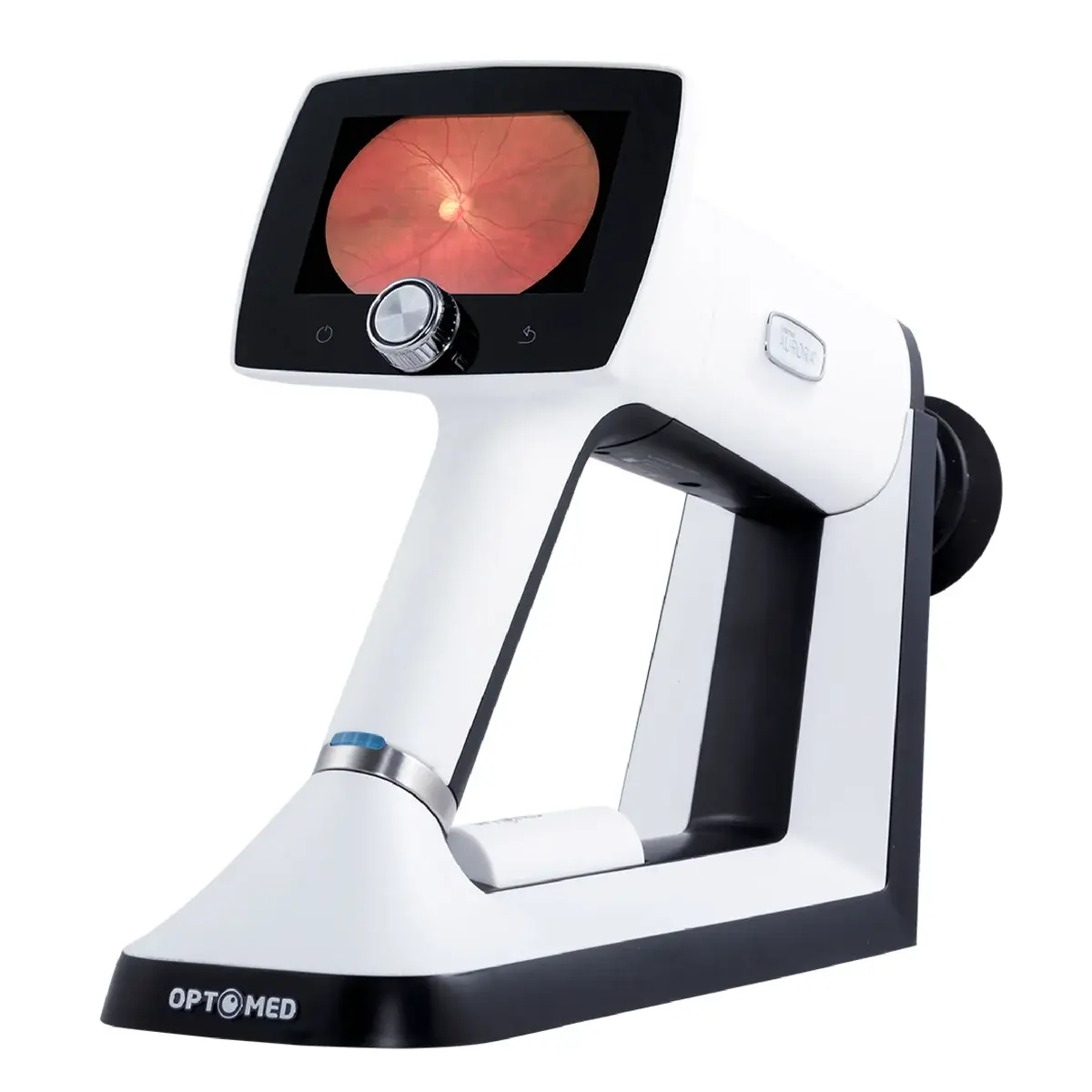
The Optomed Aurora is a handheld retinal camera, and AEYE-DS, an autonomous AI reader, names it in its own FDA record. In ZunovaMD its studies are reviewed by clinical staff (CPT 92227), read by a physician (CPT 92228), or read at the point of care by AEYE-DS, whose FDA records name this camera (CPT 92229).
  • 510(k) cleared: K180378
  • CPT 92227, 92228, 92229
  • Staff upload works today
  • Not connected yet
The Optomed Aurora handheld retinal camera, showing a retina image on its screen.
Product photo: Optomed

How Aurora studiesreach the chart.

Staff add the Aurora's images, and the AI's report when there is one, to the patient's order. A result from AEYE-DS shows on the study with its product name and version, and the reader can accept it as the read of record. The vendor could also send studies through the ZunovaMD device API. No vendor connection for the Aurora is live yet.

  1. Order

    A clinician signs the order

    In ZunovaMD

  2. Capture

    The Aurora takes the study

    At the Aurora

  3. Send

    The study lands on the order

    Optomed's connection, or staff upload today

  4. Read

    Someone reads and signs it

    In ZunovaMD

  5. Code

    The read sets the code

    In ZunovaMD

What the clinic sees,on the patient's order.

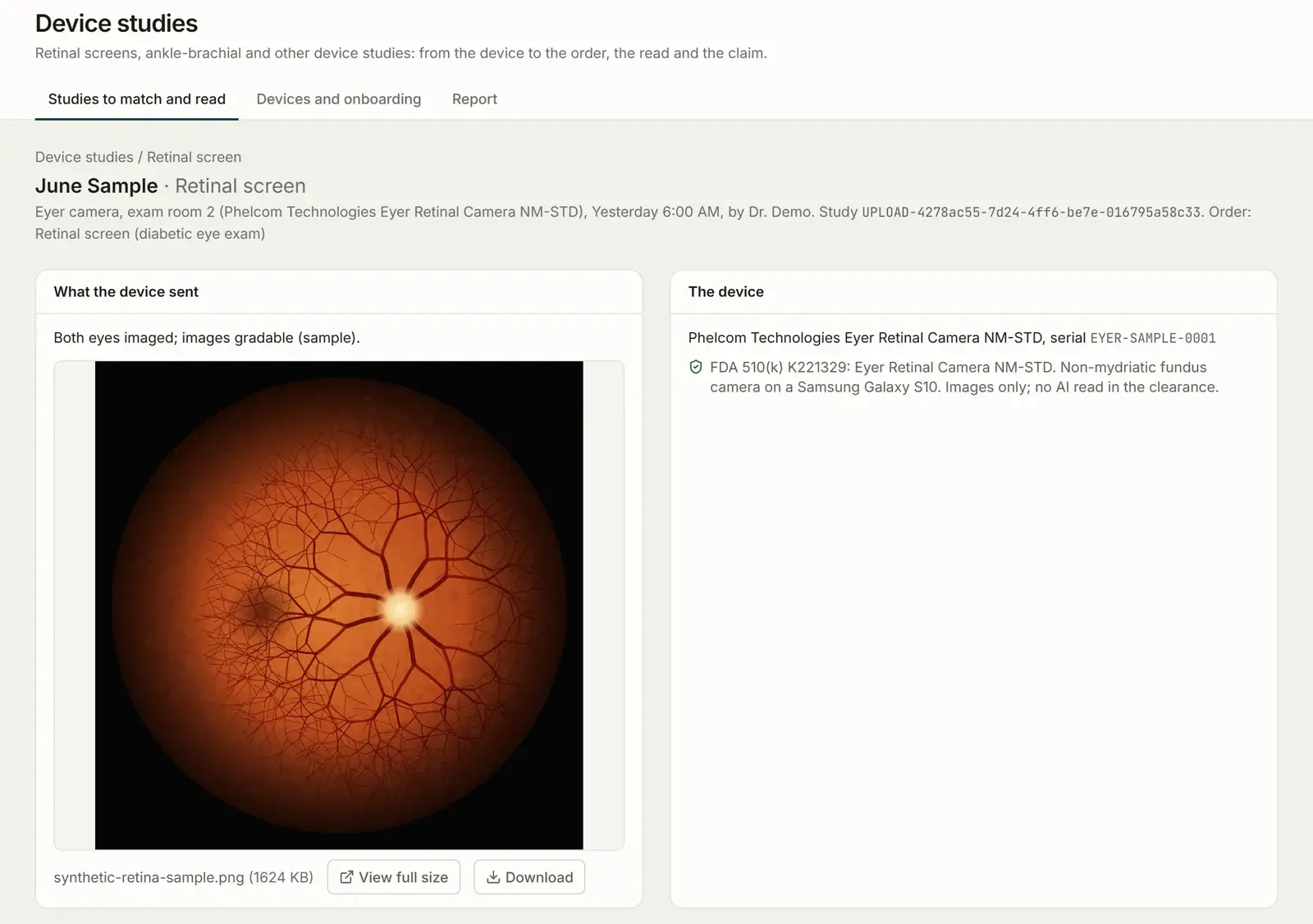
Each Aurora study opens on the order it answers, next to the chart. The reader sees what the Aurora sent, records the read, and ZunovaMD sets the code.

ZunovaMDSynthetic data
A device study in ZunovaMD showing its image on the patient's order, on a synthetic patient.
A study on its order, with the image shown in the page. DICOM files preview too.

On file with the FDA,as the FDA lists it.

Each record below is one we have read, with its source and the day we read it.

Device and product names are trademarks of their owners. Naming a device does not mean its maker endorses ZunovaMD, and ZunovaMD holds no FDA clearance of its own.

What a read bills,and the rule behind it.

ZunovaMD sets the code from who read the study, never by hand and never by a model. A rule picks a code. It does not promise payment.

StudyWho readsCodeWhat happensSource
Retinal screenClinical staff reviewCPT 92227Remote imaging for detection of retinal disease, reviewed by clinical staff.CY 2021 Physician Fee Schedule final rule, 85 FR 84629, remote retinal imaging, read 2026-11-18AAPC, CPT 2021 retinal imaging codes, read 2026-11-18
Retinal screenPhysician readCPT 92228Remote imaging with physician or QHP review, interpretation and report.CY 2021 Physician Fee Schedule final rule, 85 FR 84629, remote retinal imaging, read 2026-11-18AAO, telehealth retinal codes, read 2026-11-18
Retinal screenAutonomous AI readCPT 92229Point-of-care automated analysis and report, only when the AI's clearance names the camera.CY 2021 Physician Fee Schedule final rule, 85 FR 84629, remote retinal imaging, read 2026-11-18AAPC, how CPT categorizes AI procedures, read 2026-11-18

Connecting the Aurora,one step at a time.

What it takes for Optomed to send studies straight to the order. Until then, staff upload works at every live clinic site.

  1. Step 1

    A sandbox key

    For Optomed, on a test site with synthetic patients.

  2. Step 2

    A test on synthetic studies

    The Aurora reads the test worklist and sends studies back.

  3. Step 3

    A signed BAA

    It covers the Aurora connection before real patient data moves.

  4. Step 4

    The first real study

    Then the Aurora shows here as connected, with the date.

For Optomed: the device studies APIApply as a device maker

Optomed Aurora questions,answered plainly.

What clinics ask about the Optomed Aurora before they order its first study.

Talk with our team

More on device studies

See a Optomed Aurora studygo from device to claim.

Thirty minutes: an order on the device's worklist, the study on the order, a read, and the code on the claim. Synthetic data only.