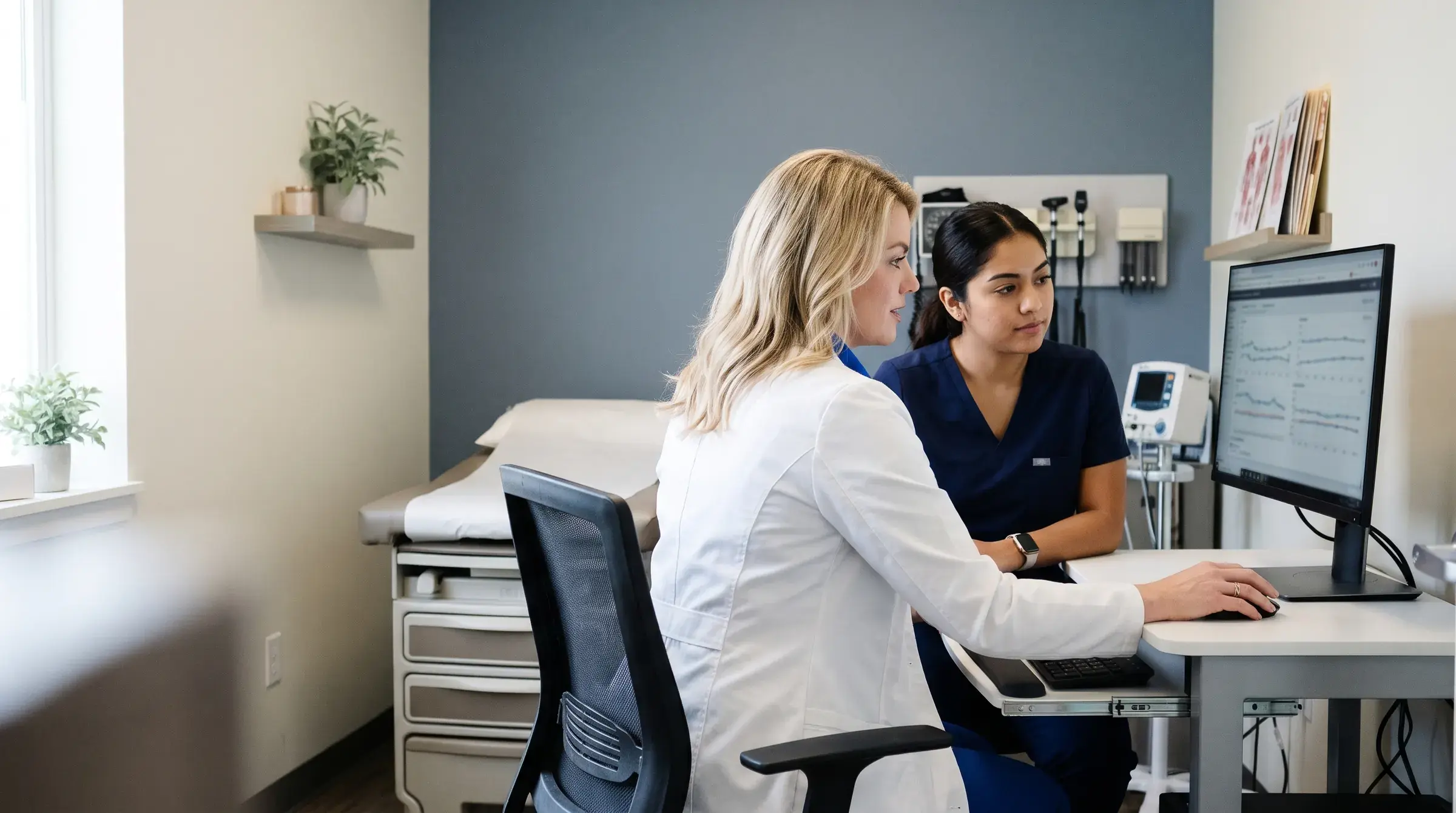
A physician and a medical assistant review results on a monitor in an exam room.

Device studies

Retinal screening,coded by who reads it.

A retinal screen photographs the retina, the layer at the back of the eye, to look for diabetic retinopathy: damage to the retina's blood vessels that can cause vision loss in people with diabetes. Three CPT codes cover it, and who reads the images decides which one: 92227 when clinical staff review them, 92228 when a physician reads and reports, and 92229 when an autonomous AI reads them at the point of care. 92229 applies only when the AI's FDA record names the camera used.

Illustrative image, AI-generated

Three codes,one for each kind of reader.

ZunovaMD records who read the study and sets the code from that, with the rule's source beside it. A rule picks a code. It does not promise payment.

StudyWho readsCodeWhat happensSource
Retinal screenClinical staff reviewCPT 92227Remote imaging for detection of retinal disease, reviewed by clinical staff.CY 2021 Physician Fee Schedule final rule, 85 FR 84629, remote retinal imaging, read 2026-11-18AAPC, CPT 2021 retinal imaging codes, read 2026-11-18
Retinal screenPhysician readCPT 92228Remote imaging with physician or QHP review, interpretation and report.CY 2021 Physician Fee Schedule final rule, 85 FR 84629, remote retinal imaging, read 2026-11-18AAO, telehealth retinal codes, read 2026-11-18
Retinal screenAutonomous AI readCPT 92229Point-of-care automated analysis and report, only when the AI's clearance names the camera.CY 2021 Physician Fee Schedule final rule, 85 FR 84629, remote retinal imaging, read 2026-11-18AAPC, how CPT categorizes AI procedures, read 2026-11-18

Cameras on file,and what each can bill.

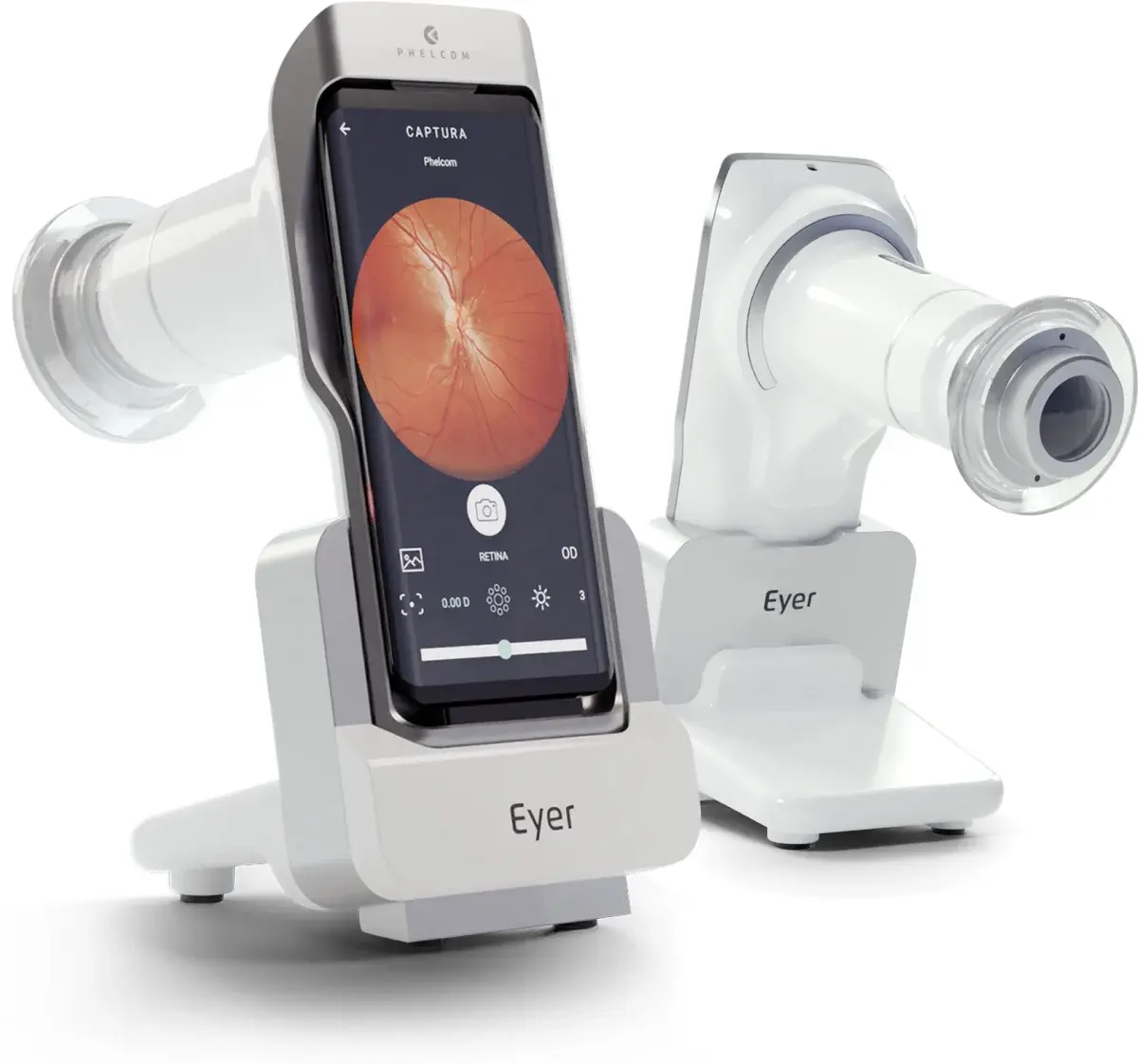
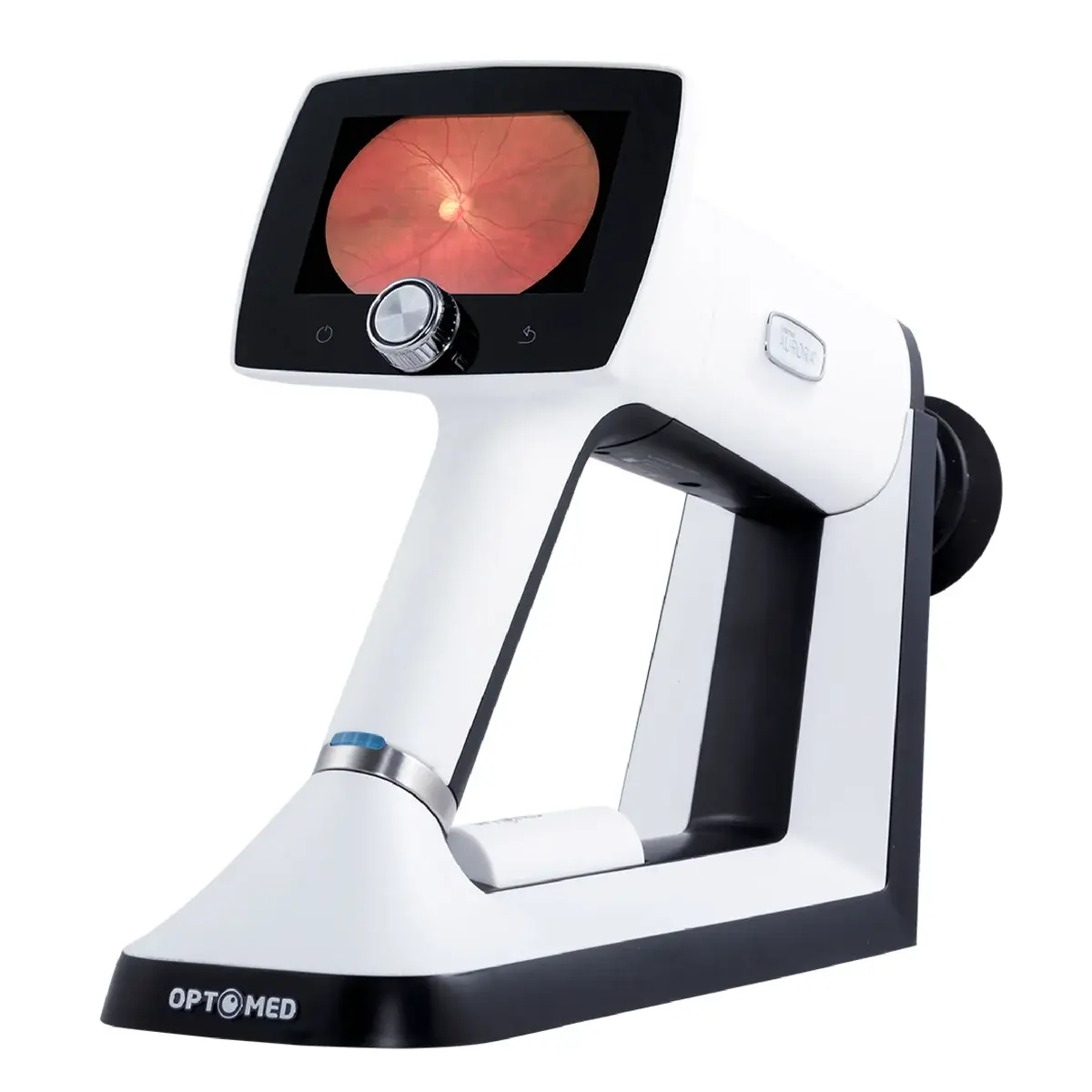
Any retinal camera's images can be added by staff. These are the cameras whose FDA records we have read, each on its own page.

Device and product names are trademarks of their owners. Naming a device does not mean its maker endorses ZunovaMD, and ZunovaMD holds no FDA clearance of its own.

The images on the order,ready for a read.

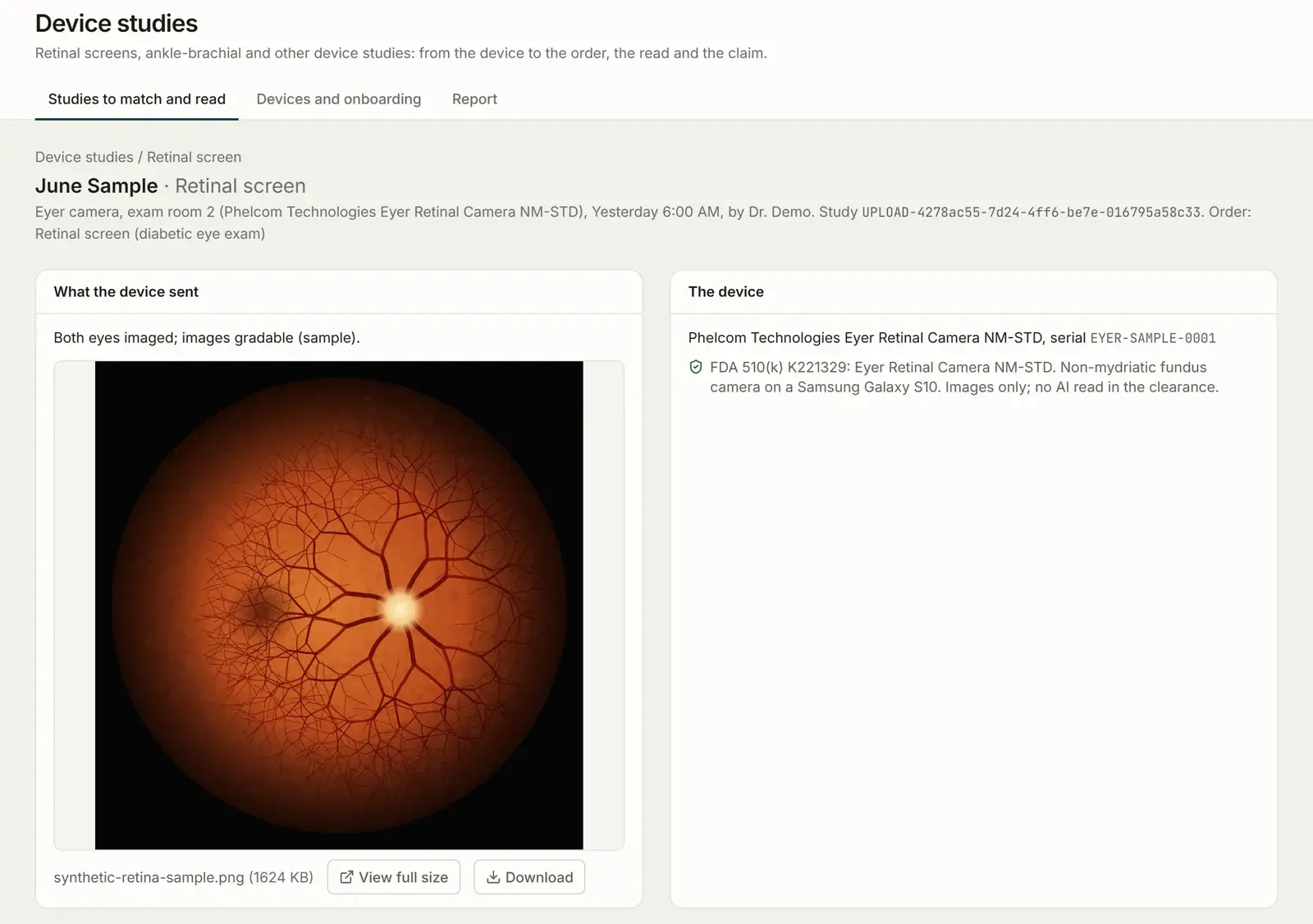
A retinal screen opens on the order it answers. The reader sees the camera's images in the page, DICOM included, records whether the screen is referable, and signs. The read sets the code.

ZunovaMDSynthetic data
A device study in ZunovaMD showing its image on the patient's order, on a synthetic patient.
A study on its order, with the image shown in the page. DICOM files preview too.

Autonomous AI reads,only with a named camera.

92229 is for an AI that reads the images at the point of care. ZunovaMD offers the AI's result as the read of record only when its FDA record names the camera. For any other camera, the AI's result shows on the study and a person reads it.

Autonomous AI reader by Digital Diagnostics

LumineticsCore

Named IDx-DR in its FDA records.

  • De Novo authorized, DEN180001 (IDx-DR)
  • 510(k) cleared, K213037 (IDx-DR v2.3)

Its FDA records name the Topcon NW400.

After the read,each answer has a next step.

  1. Normal

    Filed on the order

    The result files on the patient's order and shows in the chart, with who read it and when.

  2. Abnormal, not referable

    Filed with the note

    The result files on the order with the reader's note, for the care team to follow at the next visit.

  3. Referable: refer the patient

    A referral task opens

    ZunovaMD opens a task to refer the patient to eye care, so the follow-up has an owner.

  4. Ungradable: repeat the study

    Repeat the screen

    The read records that the images could not be graded, so the screen can be done again.

How device studies work in ZunovaMD

Retinal screen questions,answered plainly.

Codes, cameras and AI readers, as ZunovaMD applies them.

Talk with our team

Sources

  1. National Eye Institute: Diabetic Retinopathy, read 2026-11-18
  2. CY 2021 Physician Fee Schedule final rule, 85 FR 84629, remote retinal imaging (GovInfo), read 2026-11-18

See a retinal screengo from camera to claim.

Thirty minutes: an order on the camera's worklist, the images on the order, a read by staff or a physician, and the code on the claim. Synthetic data only.